Advancing Interoperable Robotic and Autonomous Systems


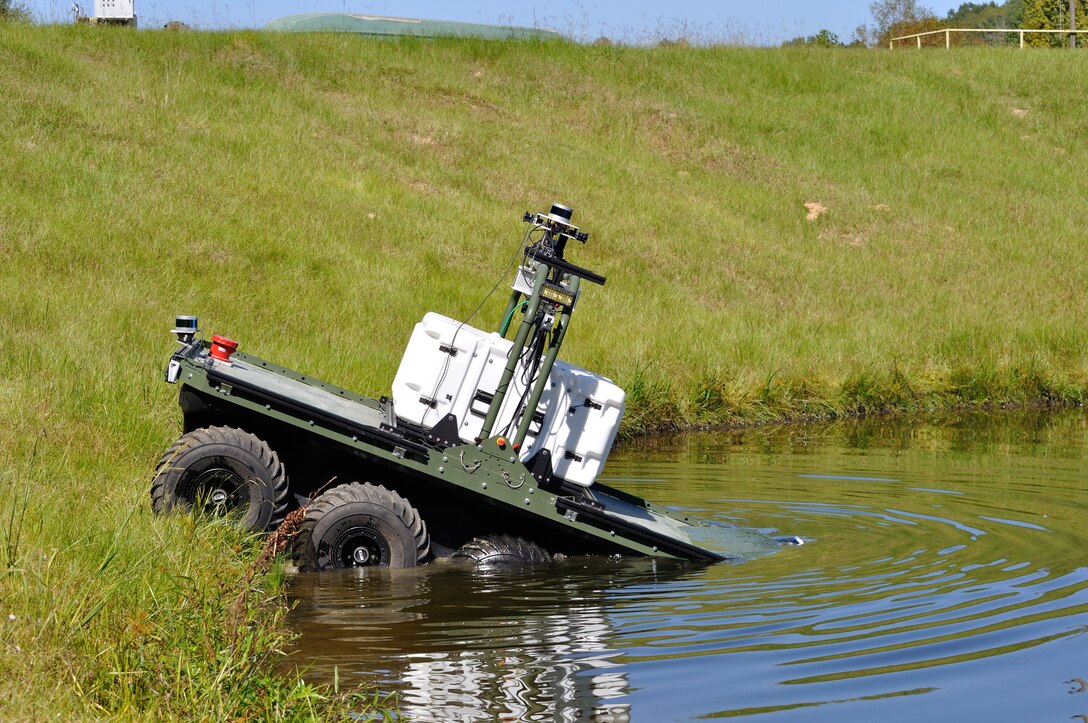


Developing robotic and autonomous technologies for defense means meeting complex government interoperability requirements. Within ERDC's Information Technology Laboratory (ITL), the Robotics, Autonomy, and Sensing Research (RASR) team develops, integrates, and deploys robotic and autonomous systems that extend human capabilities and reduce risk in hazardous military and civil engineering environments. The team helps government and commercial organizations integrate, test, and validate robotic systems that comply with the U.S. government's Modular Open Systems Approach (MOSA), ensuring hardware, software, sensors, communications, and computing technologies work together as interoperable systems.
MOSA requires military systems to be built using modular architectures and open, consensus-based interface standards that enable components to be replaced, upgraded, or repaired from multiple vendors without redesigning the entire platform. Successfully meeting these requirements can be challenging for organizations entering the defense market, particularly those without direct access to government standards, software frameworks, and interoperability requirements.
Unlike most commercial testing organizations, the RASR team works directly with the government-owned standards and software ecosystems that military robotic systems rely on. The team is familiar with ROS-M, the Ground Vehicle Systems Center’s (GVSC) Robotics ToolKit (RTK) and Army Robotic Common Software (ARCS), and the Army Research Labs Phoenix R1 and R2. The team has also established software bridges connecting systems to Interoperability Profile (IOP) Jaus, developed custom interfaces within the Warfighter Machine Interface (WMI), and produced plugins for the Android Team Awareness Kit (ATAK).
This specialized expertise enables the RASR team to provide guidance and practical integration support that helps organizations reduce technical risk, accelerate technology transition, and confidently deploy robotic and autonomous technologies into government environments while ensuring compatibility with current and future military systems.
Key Offerings
MOSA Compliance & Interoperability Validation
Evaluate robotic hardware, software, sensors, and autonomous systems against the MOSA and IOP requirements using both physical testing environments and high-fidelity simulation platforms
Software Communication Validation
Verify compliance with military communications standards, including SAE AS-4 JAUS protocols
Design, integrate, and validate robotic systems, including unmanned ground vehicles (UGVs), robotic payloads, and software systems for government applications
Integrate advanced cameras, LiDAR, navigation systems, and other sensing technologies onto mobile robotic platforms while optimizing performance and system compatibility
Generation of detailed three-dimensional spatial models from collected raw sensor data to support visualization, analysis, and mission planning
Partnership & Collaboration
Inquiries from interested parties will be received directly by the ERDCWERX team. Following initial discussions, ERDC will determine which agreement mechanism is the most appropriate.
Potential Partnership Pathways
 Cooperative Research and Development Agreement (CRADA)
-
Testing Services Agreement (TSA)
-
Service Agreement (SA)
-
Interagency Agreement (IAA) (Government)
Learn more about the available pathways to work with ERDC.
Request Information Form
Organizations interested in funding reimbursable services may submit the form below to inquire about collaboration opportunities. Parties interested in submitting solutions for potential funding consideration may visit ERDCWERX.org.